

From Degraded Lands to Resilient Futures: Nigeria’s ACReSAL Project Delivers Landmark Mid-Term Climate and Livelihood Gains
Nigeria is making measurable progress in tackling land degradation and climate vulnerability through the Agro-Climatic Resilience in Semi-Arid Landscapes (ACReSAL) Project, one of the largest integrated landscape restoration initiatives in Sub-Saharan Africa, supported by the World Bank. The project is designed to increase sustainable landscape management practices and strengthen the enabling environment for climate resilience . At its Mid-Term Review (MTR) in April 2026, the project demonstrated strong results across environmental restoration, community resilience and institutional strengthening, while contributing directly to Nigeria’s climate commitments under the Paris Agreement.
ACReSAL operates across 19 northern states and the Federal Capital Territory, targeting regions where nearly 70 million people face desertification and climate risks. With US$700 million in financing, the project targets the underlying causes of land degradation while supporting Nigeria’s climate and environmental commitments. It focuses on scaling sustainable land management practices, restoring degraded ecosystems and reversing desert encroachment through an integrated watershed management approach that combines biophysical investments, community-driven interventions and institutional strengthening. These efforts are aligned with national priorities and reinforce regional and global initiatives such as the Great Green Wall and the United Nations Convention to Combat Desertification.
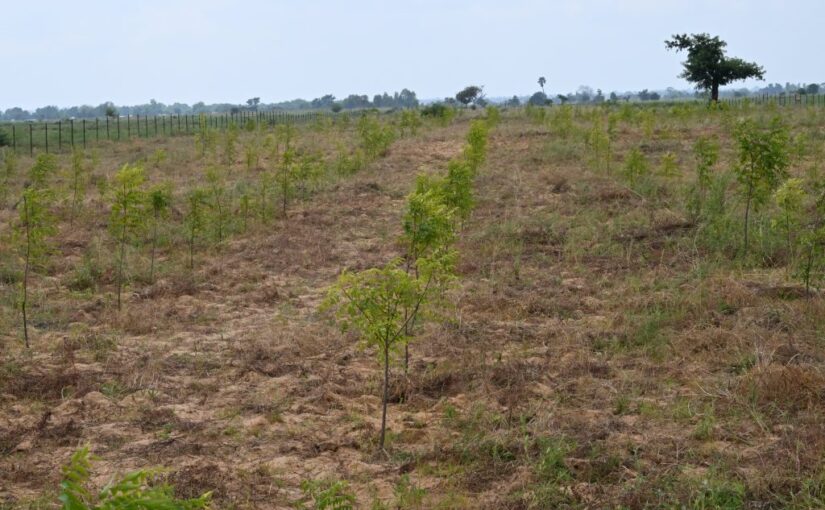
As of April 2026, ACReSAL has restored more than 1,027,570 hectares of degraded land, representing 97% of its end target. The project has reached 9.3 million direct beneficiaries, a whopping 276% of the original target with women accounting for 48.9% of participants. Disbursement stands at US$493.7 million, or 73.2% of total financing. All 20 State Watershed Management Plans have been completed, providing a coordinated framework for landscape restoration. Satellite analysis confirms a 3.6% increase in vegetation cover, while 25,298 hectares have been developed under irrigation and drainage systems, exceeding targets. In addition, 965 solar-powered boreholes have improved access to water in vulnerable communities.
These outcomes directly support Nigeria’s commitments to reduce deforestation, scale land restoration and promote climate-smart agriculture, as outlined in national climate frameworks. By increasing vegetation cover and restoring degraded ecosystems, ACReSAL contributes to carbon sequestration and supports emission reduction pathways, while strengthening resilience in climate-vulnerable regions.
ACReSAL is playing an important role in addressing the long-standing farmer–herder crisis within the broader context of insecurity in Nigeria, where competition over land and water has contributed to violent conflicts, displacement and loss of livelihoods, particularly in the northern regions. By restoring degraded landscapes and establishing functional rangelands, the project is reducing pressure on scarce resources that often trigger these conflicts. ACReSAL is creating structured and predictable systems for livestock movement. These efforts are reinforced by community-based conflict resolution mechanisms and early warning and response (EWER) systems that help detect and manage tensions before they escalate. In a context where insecurity is closely linked to environmental stress and resource scarcity, these interventions are helping to stabilize communities, reduce clashes between farmers and herders, and support more peaceful and sustainable coexistence while strengthening resilience in fragile areas.
At the household level, the project is delivering tangible socio-economic benefits. Approximately 82.2% of beneficiaries report increased incomes, while 72.7% report higher crop yields. Median monthly income has risen by 60%, from ₦50,000 to ₦80,000. Improved access to water is reported by 79.1% of households and 64.5% have adopted sustainable land management practices. These gains align with Nigeria’s adaptation priorities, including strengthening food security, improving water access and building resilience among vulnerable populations.
Women’s economic empowerment has been a notable outcome, with 9,659 women gaining secure land access and increased participation in community-based economic activities. Time savings from improved water access and infrastructure have also contributed to better educational outcomes for girls and enhanced household productivity.
Institutionally, ACReSAL is strengthening Nigeria’s climate governance architecture. The project has supported the issuance of a ₦50 billion sovereign green bond, the first of its kind in West Africa while advancing the establishment of integrated landscape management agencies and a national soil health program with 774 laboratories planned nationwide. A greenhouse gas baseline has been developed across participating states and the grievance redress mechanism has achieved a 98.9% resolution rate. These efforts reinforce implementation of the Climate Change Act and support long-term climate governance.
While primarily focused on land and agriculture, ACReSAL also contributes indirectly to broader climate goals, including Nigeria’s net-zero emissions target by 2060. By enhancing natural carbon sinks and promoting sustainable land use, the project complements national efforts to end gas flaring by 2030 and reduce methane emissions estimated at 60% by 2035 and up to 95% by 2050. It also supports the enabling environment for renewable energy expansion and clean energy access, particularly in rural and underserved communities.
The Mid-Term Review confirms strong overall performance, with high relevance, effectiveness and impact. However, it also highlights key areas requiring attention. Community Revolving Fund (CRF) disbursement remains low at 13.25%, limiting reach at the grassroots level. Community-led restoration stands at 36% of target, while extension services coverage remains at 3%. Protected area reporting is currently at zero due to pending assessments and 18 states lack fully established institutional structures to sustain long-term gains.
With 23 months remaining to project closure and an additional financing (AF) in view, ACReSAL is entering a critical phase focused on accelerating implementation and scaling impact. Priority actions include expanding community financing, strengthening monitoring and evaluation systems and reinforcing institutional sustainability frameworks across all participating states.
ACReSAL positions Nigeria as a leader in integrated climate resilience programming in Sub-Saharan Africa. By linking environmental restoration with livelihoods, finance and governance, the project demonstrates a scalable model for delivering both emission reduction and climate adaptation outcomes. The Mid-Term Review represents a pivotal opportunity to consolidate progress and ensure that ACReSAL leaves a lasting legacy of restored landscapes, strengthened institutions and resilient communities.