
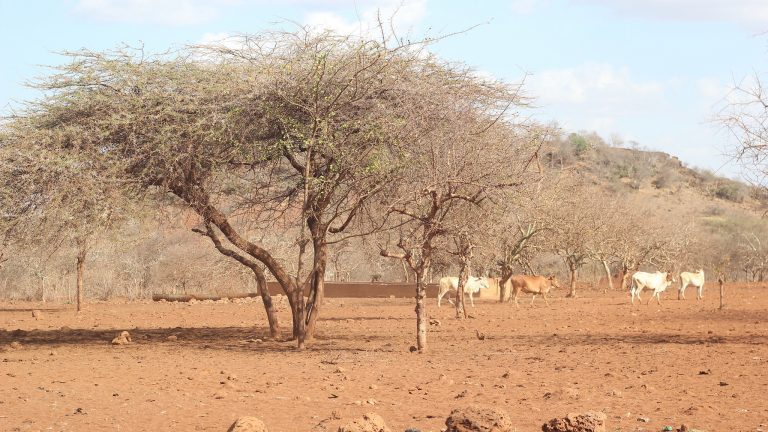

The African Agricultural Problem- Agriculture in Semi- arid regions
The semi-arid regions of the world represent fragile ecosystems that are undergoing significant alterations due to human activities. The increasing human population has intensified demands on these areas for sustenance, raising concerns about the potential acceleration of desertification, these regions present challenging living conditions for humans. The famines caused by droughts in the African Sahel during the late 1960s and 1970s highlighted the unreliability of current agricultural systems in these zones. Significant fluctuations in agricultural output have been observed in the semi-arid regions of Australia, North America, and the former Soviet Union due to periodic droughts, despite substantial investments in agricultural technology. Therefore, this is not only an African problem. The primary challenge is to manage these diverse semi-arid regions to enhance and stabilize productivity while mitigating environmental degradation. Irrigation can play a crucial role in increasing and stabilizing agricultural production in these areas. The World Bank assisted project Agro-Climatic Resilience in Semi-Arid Landscapes (ACReSAL) aims to address Agriculture in Semi-Arid Environments in Nigeria where rainfall is limited and irrigation resources are unavailable.
Agriculture in semi-arid regions faces major challenges. Water scarcity and erratic rainfall are primary issues, with low precipitation and unreliable timing affecting crop growth. High evapotranspiration further depletes water resources. Soil degradation also poses problems due to low organic matter, erosion, and salinization from improper irrigation practices. Climate change intensifies these issues with increased variability in weather and higher temperatures. Socio-economically, farmers face low yields and food insecurity, poverty, limited capital for investment, and overgrazing. Additionally, modern high-yield crops are often unsuitable, leaving farmers dependent on traditional, lower-yielding varieties.
Innovative solutions for enhancing water efficiency, soil health, and resilience in agriculture are required. These include water management strategies like rainwater harvesting, micro- and macro-catchments, drip irrigation, solar-powered irrigation, and deficit irrigation to optimize water use. It is also important to focus on Soil management for conservation agriculture to provide permanent soil cover, crop rotation, integrated soil fertility management, and contour bunding. Crop selection that emphasizes on selecting drought-tolerant varieties, indigenous crops, and agroforestry for resilience and productivity and Socio-economic strategies that involve climate-smart agriculture, access to microfinance, and index-based insurance to support farmers financially and mitigate risks.
Integrating various techniques into a cohesive system tailored to local environments is essential for success in semi-arid agriculture. This includes using drought-tolerant crops, no-till systems, legume residue for soil cover, drip irrigation fed by rainwater harvesting, and planting fertilizer trees like Federbio albida for shade and soil enrichment. By adopting these resilient practices, agriculture in semi-arid regions can prosper, ensuring food security and sustainable livelihoods.